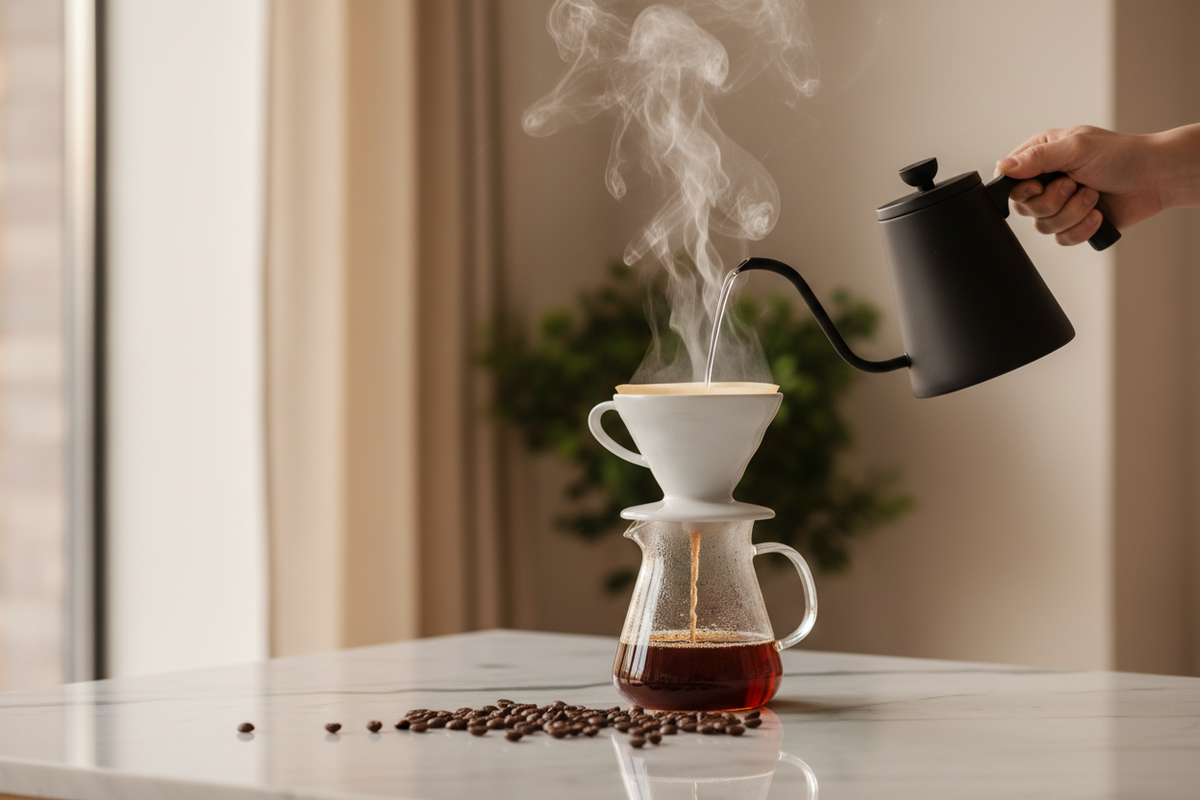
Why Coffee Tastes Better Fresh Brewed Every Time
Share
There’s a reason that first sip from a freshly brewed cup hits differently than coffee that’s been sitting on a burner for an hour. Most coffee drinkers notice the difference immediately, but few understand why coffee tastes better fresh brewed at a chemical level. The answer comes down to oxygen, heat, and a surprisingly fragile collection of aromatic compounds that begin breaking down the moment you grind your beans. Once you understand what’s actually happening inside your cup, you’ll never look at a stale pot of coffee the same way again.
Table of Contents
- Key takeaways
- Why coffee tastes better fresh brewed: the chemistry behind it
- Fresh vs. pre-ground and reheated coffee
- Brewing practices that protect freshness
- How your senses shape the fresh coffee experience
- My take on freshness after years of brewing
- Taste the difference with Cozynotescoffee
- FAQ
Key takeaways
| Point | Details |
|---|---|
| Oxidation kills flavor fast | Grinding exposes beans to oxygen, causing volatile aromatics to degrade within minutes. |
| Heat is a double-edged tool | Brewing requires heat, but reheating breaks down acids into bitter, unpleasant compounds. |
| Grind fresh, brew fresh | Whole beans ground immediately before brewing preserve the most complex flavor compounds. |
| Brewing technique matters | Water temperature, grind size, and bloom time directly shape your fresh coffee flavor profile. |
| Sensory context amplifies taste | Aroma, ritual, and environment shape how your brain perceives freshness and flavor depth. |
Why coffee tastes better fresh brewed: the chemistry behind it
The moment you grind coffee beans, you’re starting a clock. Grinding dramatically increases the surface area of the coffee, and every exposed surface is now in direct contact with oxygen. Volatile aromatic compounds begin escaping immediately, and oxidation accelerates the breakdown of the delicate molecules responsible for coffee’s brightness, sweetness, and depth.
Coffee contains over 1,000 distinct chemical compounds that contribute to its flavor. These include aldehydes, ketones, and furans that create the toasty, nutty, and floral notes you associate with a great cup. The problem is that these compounds are genuinely unstable. Aroma loss is a key driver of perceived flavor flattening, meaning what you experience as “stale” or “flat” coffee is literally the absence of chemistry that was there minutes before.
Here’s what happens at each stage of degradation:
- Grinding: Oxygen contact begins immediately. Aromatic compounds off-gas rapidly, and oils on the surface of the grounds start oxidizing.
- Brewing: Hot water extracts flavor compounds, but heat also begins transforming them. The balance between acids, sugars, and bitter compounds shifts during extraction.
- Sitting in the pot: Continued heat exposure causes chlorogenic acids to break down further, pushing the cup toward bitterness and flatness.
- Cooling and reheating: Sweetness perception drops as temperature falls, and reheating accelerates chemical degradation rather than restoring the original flavor.
Pro Tip: If you can smell your coffee grounds strongly before brewing, those are the same aromatic compounds that would have been in your cup. Grind right before brewing to keep them where they belong.
The temperature shift after brewing also changes how you perceive the cup. Sweetness is most detectable at warmer temperatures, which is why coffee that has cooled even slightly can taste more acidic and bitter. This isn’t just subjective preference. It’s a physiological response to temperature-dependent taste receptor activity.
Fresh vs. pre-ground and reheated coffee
Understanding the importance of brewing coffee fresh becomes clearest when you put fresh and stale coffee side by side. The differences are not subtle once you know what to look for.

Pre-ground coffee has already lost a significant portion of its volatile aromatics by the time it reaches your grinder. Grinding immediately before brewing preserves flavor by minimizing oxidation, and the contrast with pre-ground coffee is measurable, not just anecdotal. Pre-ground coffee also tends to have inconsistent particle sizes from commercial processing, which leads to uneven extraction and a muddier flavor profile.
Reheated coffee is a different kind of problem. When you reheat coffee, you’re not just warming it up. Chlorogenic acids break down into caffeic and quinic acids with each heating cycle, which are significantly more bitter and astringent. The result is a cup that tastes harsh and can even cause stomach irritation for sensitive drinkers.
| Factor | Fresh brewed coffee | Pre-ground or reheated coffee |
|---|---|---|
| Aromatic compounds | High, complex, volatile | Significantly reduced |
| Bitterness level | Balanced with sweetness | Elevated, often harsh |
| Acidity character | Bright, pleasant | Sharp, sometimes irritating |
| Flavor complexity | Layered, nuanced | Flat, one-dimensional |
| Antioxidant content | Well preserved | Degraded, especially when reheated |
The antioxidant angle is worth noting. Freshly brewed coffee preserves health-beneficial antioxidants better than old or reheated coffee. This means fresh brewing isn’t just a flavor preference. It’s also the smarter choice for getting the most out of what coffee naturally offers.

Pro Tip: If you can’t finish a full pot, transfer leftover coffee to a sealed thermos immediately after brewing rather than leaving it on a heated burner. It won’t stay perfect, but it will degrade far more slowly.
Brewing practices that protect freshness
Knowing why fresh coffee tastes better is only half the story. The other half is knowing how to brew coffee for best taste at home. These steps are grounded in the same chemistry discussed above, and each one addresses a specific point of flavor loss.
-
Grind right before brewing. This is the single most impactful change most home brewers can make. Burr grinders produce uniform particles compared to blade grinders, which improves extraction consistency and reduces both sourness and bitterness. Uniform grind size means water flows evenly through the grounds and extracts flavor compounds at the same rate.
-
Use water at the right temperature. Water between 90°C and 96°C extracts flavor without scorching the grounds. Boiling water at 100°C pulls excessive bitter compounds and damages delicate aromatics. If you don’t have a temperature-controlled kettle, let boiling water sit for 30 to 45 seconds before pouring.
-
Bloom your grounds. Pre-wetting grounds for 30 seconds before full brewing releases trapped CO2 from fresh beans. This bloom phase allows water to penetrate the grounds more evenly during the main brew, improving clarity and flavor balance. If your grounds don’t bloom (produce bubbles), they are likely stale.
-
Dial in your coffee-to-water ratio. A standard starting point is 1 gram of coffee per 15 to 17 grams of water, adjusted to your taste. Too little coffee leads to over-extraction and bitterness. Too much leads to under-extraction and sourness.
-
Store beans properly. Airtight containers at room temperature outperform refrigerators and large open bags. The fridge introduces moisture and odors. A sealed, opaque container away from heat and light is the practical standard for maintaining freshness between brews.
-
Buy whole beans in smaller quantities. Buying a two-week supply at a time rather than a large bulk bag means your beans are consistently fresher. This is especially relevant for specialty roasts where the fresh coffee flavor profile is the whole point.
How your senses shape the fresh coffee experience
Chemistry explains what’s in the cup. Sensory science explains what you actually experience when you drink it. These are not the same thing, and the gap between them is where a lot of the magic of fresh brewed coffee lives.
The aroma of freshly brewed coffee reaches your brain before the first sip does. That smell triggers anticipatory dopamine release, which primes your brain to experience pleasure. This is why the smell of brewing coffee in the morning feels so satisfying even before you’ve tasted anything. The aroma is itself part of the flavor experience.
- Retronasal olfaction: When you sip coffee, aromatic compounds travel from the back of your mouth up into your nasal passages. This retronasal smell is responsible for most of what you perceive as “flavor.” Fresh coffee has far more volatile compounds available for this process than stale coffee does.
- Temperature and taste receptor sensitivity: Warmer coffee activates sweetness receptors more effectively. As coffee cools, the same cup can taste progressively more bitter and sour, even without any chemical change.
- Environment and ritual: Research on sensory perception consistently shows that context shapes taste. The ritual of grinding, blooming, and pouring amplifies your attention to the cup, which directly improves how you perceive its complexity.
- Coffee shop effect: Coffee’s chemical fingerprint is measurable and specific. Coffee shops often taste better partly because their equipment is calibrated for consistency and their beans are typically fresher, but also because the environment signals “this is a special coffee moment” to your brain.
The practical takeaway is that brewing fresh coffee and drinking it mindfully, without distraction, in a comfortable setting, delivers a genuinely different sensory experience than gulping reheated coffee from a travel mug on autopilot. Both are coffee. Only one is actually enjoyable.
My take on freshness after years of brewing
I’ll be honest: I spent years thinking freshness was mostly marketing language. I figured coffee was coffee, and the difference between fresh and stale was just a matter of preference. I was wrong, and it took side-by-side tasting to prove it to me.
The first time I brewed two cups from the same beans, one from grounds I’d pre-measured the night before and one ground fresh that morning, the difference was startling. The pre-ground cup was fine. The fresh cup had a sweetness and brightness that the other simply lacked. No amount of adjusting the ratio or temperature brought the pre-ground cup up to the same level.
What I’ve learned since then is that freshness isn’t a single variable. It’s a chain. Fresh beans, ground fresh, brewed at the right temperature, with a proper bloom, and consumed promptly. Break any link in that chain and you feel it in the cup. The good news is that none of these steps are difficult. They just require intention.
I also think people underestimate how much the ritual matters. Taking three extra minutes to grind and bloom your coffee changes how you approach the cup. You’re paying attention. That attention is part of why fresh brewed coffee tastes better, and it’s something no amount of technology can replicate.
— Cozy
Taste the difference with Cozynotescoffee

If this article has you thinking about upgrading your home brewing experience, the starting point is always the beans. Cozynotescoffee sources from trusted small farms and roasts in small batches specifically to preserve the fresh flavor compounds that make a great cup possible. You can explore the full fresh coffee selection to find roasts that match your flavor preferences, from bright and nuanced to bold and rich. For those who want something genuinely different, the medium roast with mushrooms delivers a smooth, layered cup with added functional benefits, and the African espresso is a standout for anyone who wants to experience what a truly fresh, specialty-roasted bean tastes like at home.
FAQ
Why does fresh brewed coffee taste better than old coffee?
Fresh brewed coffee retains volatile aromatic compounds that degrade rapidly through oxidation and heat exposure. Once these compounds are lost, the cup tastes flat, bitter, and one-dimensional.
Does grinding coffee fresh actually make a difference?
Yes. Grinding immediately before brewing minimizes oxidation and preserves the aromatic compounds responsible for sweetness, brightness, and complexity. Pre-ground coffee loses these compounds before it ever reaches your cup.
Why does reheated coffee taste bitter?
Reheating breaks down chlorogenic acids into caffeic and quinic acids, which are significantly more bitter and astringent. Each reheating cycle compounds this effect, making the coffee progressively harsher.
What water temperature is best for fresh brewed coffee?
Water between 90°C and 96°C extracts flavor without scorching the grounds or pulling excessive bitterness. Boiling water at 100°C over-extracts bitter compounds and damages delicate aromatics.
What is the bloom phase and why does it matter?
The bloom is a 30-second pre-wet of your grounds before full brewing. It releases trapped CO2 from fresh beans, allowing water to penetrate evenly and improving the clarity and balance of the final cup.
Recommended
- Cold Brew Coffee - Smooth & Refreshing Beverage for You – Cozy Notes Coffee Co
- Delicious Cold Brew Coffee - Smooth and Refreshing Drink – Cozy Notes Coffee Co
- Delightful Flavored Coffee Sample Pack - Taste Nature’s Best – Cozy Notes Coffee Co
- Indulge in Dark Roast Coffee with Mushrooms - Rich Flavor – Cozy Notes Coffee Co