Best Coffee for Cold Brew: Crafting Your Perfect Chilled Ritual

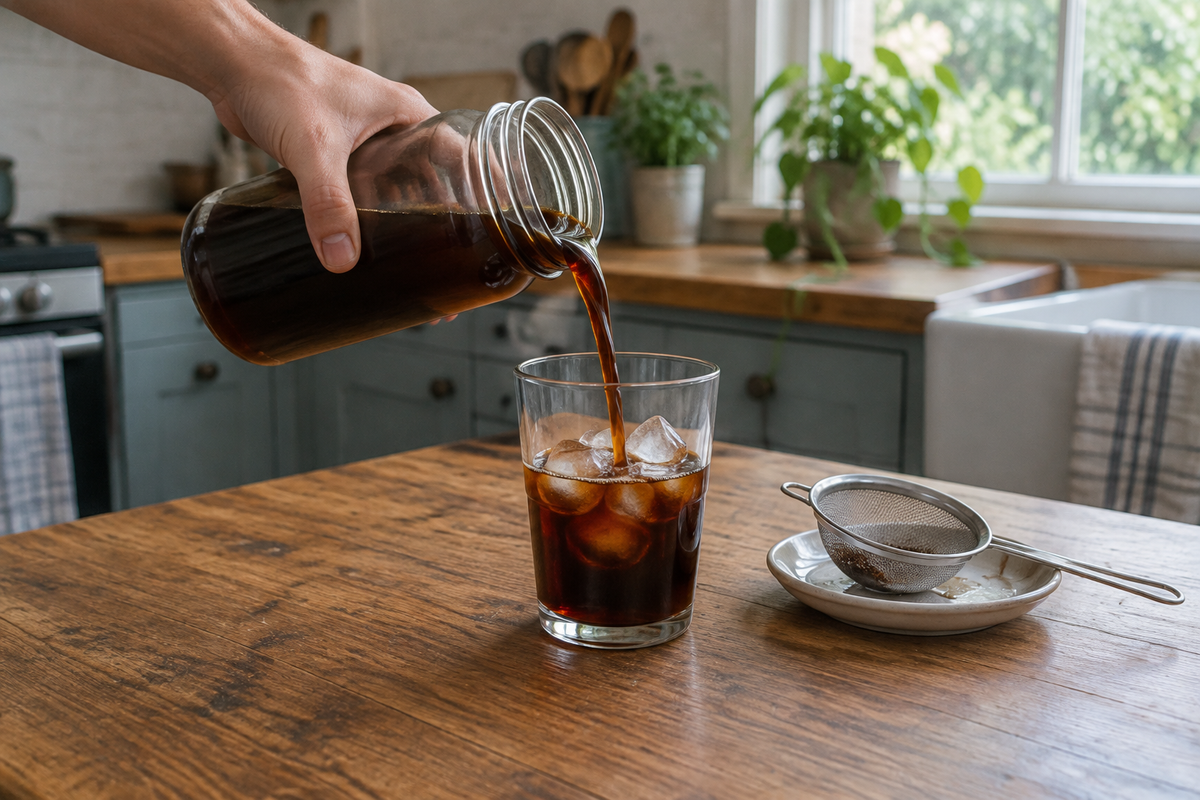
Cold brew coffee being poured from a glass pitcher into a tall glass filled with large ice cubes on a white marble surface

Cold brew is one of the smoothest, most forgiving ways to enjoy coffee — and the beans you choose make all the difference. Without heat, you lose the bright, acidic notes that hot brewing extracts, which is actually a good thing for most drinkers. What you get instead is a naturally sweet, low-acid concentrate with a clean, lingering finish that holds up beautifully over ice.

This guide covers everything you need: the right beans, the right ratios, grind size, steep time, and a step-by-step method for café-quality cold brew at home.

Table of Contents

Why Bean Choice Matters for Cold Brew

Cold brew extracts differently than hot coffee. Cold water extracts flavor slowly, which means the subtle, natural tasting notes of the bean take center stage. Mass-market dark roasts — the kind sitting on grocery store shelves for months — turn cold brew chalky and burnt. Freshly roasted specialty beans, by contrast, produce a clean, nuanced cup with no harsh aftertaste.

What you want for cold brew: beans with natural sweetness, chocolate or caramel notes, and a smooth body that holds up over a long steep. Our Cold Brew Coffee Concentrate — The Slow Steep is roasted specifically for this method: smooth, low-acid, and naturally sweet right out of the jar.

Key Takeaways

Point Details
Best roast for cold brew Medium to medium-dark — sweet, smooth body, holds up over long steep
Best grind size Coarse — similar to raw sugar or coarse sea salt
Concentrate ratio 1:4 coffee to water
Ready-to-drink ratio 1:8 coffee to water
Steep time 12–16 hours in the fridge; never exceed 20–24 hours
Acidity vs. hot coffee 60–70% less acid — gentler on sensitive stomachs
Caffeine vs. hot coffee Higher per oz of concentrate; similar per serving when diluted
Shelf life 7–10 days for concentrate; 5–7 days for ready-to-drink

Best Roast Levels for Cold Brew

Medium Roast

Medium roasts are the sweet spot for cold brew. They retain enough origin character to be interesting, while developing the sweetness and body that cold extraction rewards. Single-origin medium roasts produce a clean, nuanced cold brew that's excellent sipped straight over ice.

Medium-Dark & Dark Roast

If you want a bolder, more intense cold brew concentrate — perfect for cold brew lattes — go darker. Our 6-Bean Dark Roast Espresso Blend makes an exceptional cold brew with rich chocolate and caramel depth that holds up beautifully with oat milk.

Naturally Flavored Beans

Here's something most cold brew guides skip: naturally flavored beans are exceptional for cold brew. At Cozy Notes, we infuse natural oils into our beans while they're still warm from the roast. Those oils bind to the bean's surface and dissolve beautifully into cold water during a long steep — delivering clean, fragrant flavor without chemical residue or the sticky syrup residue that ruins grinders. A warm-oiled vanilla or cinnamon roast steeped cold produces a naturally sweet, aromatic concentrate that needs nothing added.

Single Origin vs. Blend for Cold Brew

Both work beautifully, but they deliver different experiences. Single-origin coffees give you a cleaner, more defined flavor profile — great for sipping straight over ice. Blends tend to be more complex and forgiving, ideal for cold brew lattes or cocktails where you want depth and body over nuance.

Not sure where to start? Our Best Sellers Coffee Sample Pack lets you try multiple origins and roasts before committing to a full cold brew batch.

Cold Brew vs. Iced Coffee: What's the Difference?

These two drinks are often confused but are fundamentally different in how they're made and what they taste like.

  • Iced coffee is hot-brewed coffee poured over ice. It's faster to make but tends to be more acidic and can taste diluted as the ice melts.
  • Cold brew is never exposed to heat. It steeps in cold water for 12–16 hours, producing a concentrate that's naturally sweeter, smoother, and significantly less acidic than iced coffee.

The result: cold brew is richer, more concentrated, and far less bitter. It also keeps for up to 10 days in the fridge, making it ideal for batch brewing.

Does Cold Brew Have More Caffeine Than Hot Coffee?

It depends on how you drink it. Cold brew concentrate has significantly more caffeine per ounce than hot coffee — because you're using more grounds and less water. But when you dilute concentrate 1:1 with water or milk to serve, the caffeine per cup ends up roughly comparable to a standard drip coffee, sometimes slightly higher.

The key variable is your ratio. A 1:4 concentrate diluted 1:1 gives you a strong cup. A 1:8 ready-to-drink brew is closer to regular coffee strength. Adjust to your preference.

Mason jar of cold brew concentrate beside a kitchen scale, wooden scoop of coarse coffee grounds, and a fine mesh strainer on white marble

Cold Brew Ratios & Equipment

Equipment you need:

  • Large mason jar or French press
  • Burr grinder set to coarse (or request coarse-ground at checkout)
  • Fine-mesh sieve, cheesecloth, or paper filter
  • Cold, filtered water

The ratios:

  • Concentrate: 1:4 coffee to water — dilute 1:1 before serving
  • Ready-to-drink: 1:8 coffee to water — pour straight over ice

Step-by-Step: How to Make Cold Brew at Home

  1. Grind coarsely — aim for the texture of coarse sea salt or raw sugar. Fine grinds over-extract during the long steep and produce muddy, bitter cold brew.
  2. Measure and combine — add grounds to your jar first, then pour cold filtered water over them slowly. Use your chosen ratio (1:4 for concentrate, 1:8 for ready-to-drink).
  3. Steep 12–16 hours in the fridge — the fridge produces a cleaner, smoother result than counter-steeping. Don't exceed 20–24 hours — extended steeping extracts harsh tannins.
  4. Strain slowly — pour through a fine-mesh strainer or paper filter. Do not press or squeeze the grounds — that releases bitter oils into your finished brew.
  5. Dilute and serve — if you made concentrate, dilute 1:1 with water, milk, or oat milk over large ice cubes. Drink straight black, or add a splash of oat milk for a naturally sweet cold brew latte.

Pro Tips for Elevating Your Cold Brew

  • Make cold brew ice cubes. Freeze leftover concentrate into ice cube trays. As they melt, they strengthen your cup instead of diluting it.
  • Try naturally flavored cold foam. Froth a small amount of oat milk and spoon it over your cold brew concentrate. If you brewed with a vanilla or cinnamon roast, the result is a clean, sugar-free cold brew latte with no syrups needed.
  • Store smart. Cold brew keeps in a sealed glass container in the fridge for up to 7–10 days. Avoid plastic — it absorbs flavor over time.
  • Batch brew on Sundays. A single batch covers your whole week. Make it part of your Sunday ritual and you'll never run out mid-week.

Frequently Asked Questions

What is the best coffee for cold brew?

Medium to medium-dark roast specialty coffee with natural sweetness and body — chocolate, caramel, or nutty notes work best. Freshly roasted beans are essential; stale grocery store coffee produces flat, chalky cold brew regardless of roast level. Our Cold Brew Coffee Concentrate — The Slow Steep is roasted specifically for this method.

What is the best cold brew ratio?

1:4 coffee to water for concentrate (dilute 1:1 before serving), or 1:8 for ready-to-drink. Start with 1:4 concentrate — it gives you more flexibility to adjust strength when serving and keeps longer in the fridge.

What is the best grind size for cold brew?

Coarse — similar to the texture of coarse sea salt or raw sugar. Fine grinds over-extract during the long steep and produce bitter, muddy cold brew. If you don't have a burr grinder, request coarse-ground at checkout.

How long should you steep cold brew?

12–16 hours in the refrigerator is the sweet spot. The fridge produces a cleaner, smoother result than counter-steeping. Don't exceed 20–24 hours — extended steeping extracts harsh tannins that make the brew bitter regardless of bean quality.

Does cold brew have more caffeine than hot coffee?

Cold brew concentrate has more caffeine per ounce than hot coffee, but when diluted to a standard serving strength (1:1 with water or milk), the caffeine per cup is roughly comparable — sometimes slightly higher. The exact amount depends on your ratio, steep time, and the beans you use.

What's the difference between cold brew and iced coffee?

Iced coffee is hot-brewed coffee poured over ice — faster to make but more acidic and prone to dilution. Cold brew is never exposed to heat; it steeps in cold water for 12–16 hours, producing a concentrate that's naturally sweeter, smoother, and 60–70% less acidic than iced coffee. Cold brew also keeps for up to 10 days in the fridge.

Why is my cold brew bitter?

The most common causes: grinding too fine, steeping longer than 20–24 hours, using stale beans, or squeezing the grounds during straining. Start with a coarse grind and freshly roasted beans — bitterness almost always disappears when those two variables are right.

Can I use flavored coffee beans for cold brew?

Yes — but avoid beans coated in synthetic, sticky syrups. Look for beans infused with natural oils while warm. Those oils dissolve cleanly into cold water during the long steep and produce a smooth, naturally fragrant concentrate with no artificial aftertaste and no residue in your grinder.

0 comments

Leave a comment

Please note, comments need to be approved before they are published.