How to Store Coffee Beans to Keep Them Fresh Longer
William TorresShare
You spent time choosing the perfect bag of specialty coffee — single-origin, freshly roasted, ethically sourced. But if you're storing it wrong, you're losing flavor before the first cup is even brewed. Proper coffee bean storage is one of the most overlooked parts of the coffee experience, and it makes a bigger difference than most people realize.
Here's everything you need to know to keep your beans tasting their best from the first scoop to the last.
Why Coffee Beans Go Stale
Coffee beans are porous and highly reactive. Once roasted, they begin releasing CO₂ and absorbing oxygen — a process called oxidation. Exposure to four main enemies accelerates this degradation:
- Air (oxygen) — the primary culprit behind stale, flat coffee
- Light — UV rays break down aromatic compounds
- Heat — accelerates chemical reactions that dull flavor
- Moisture — causes mold and destroys the bean's cell structure
Understanding these four factors is the foundation of smart coffee storage.
The Best Container for Coffee Beans
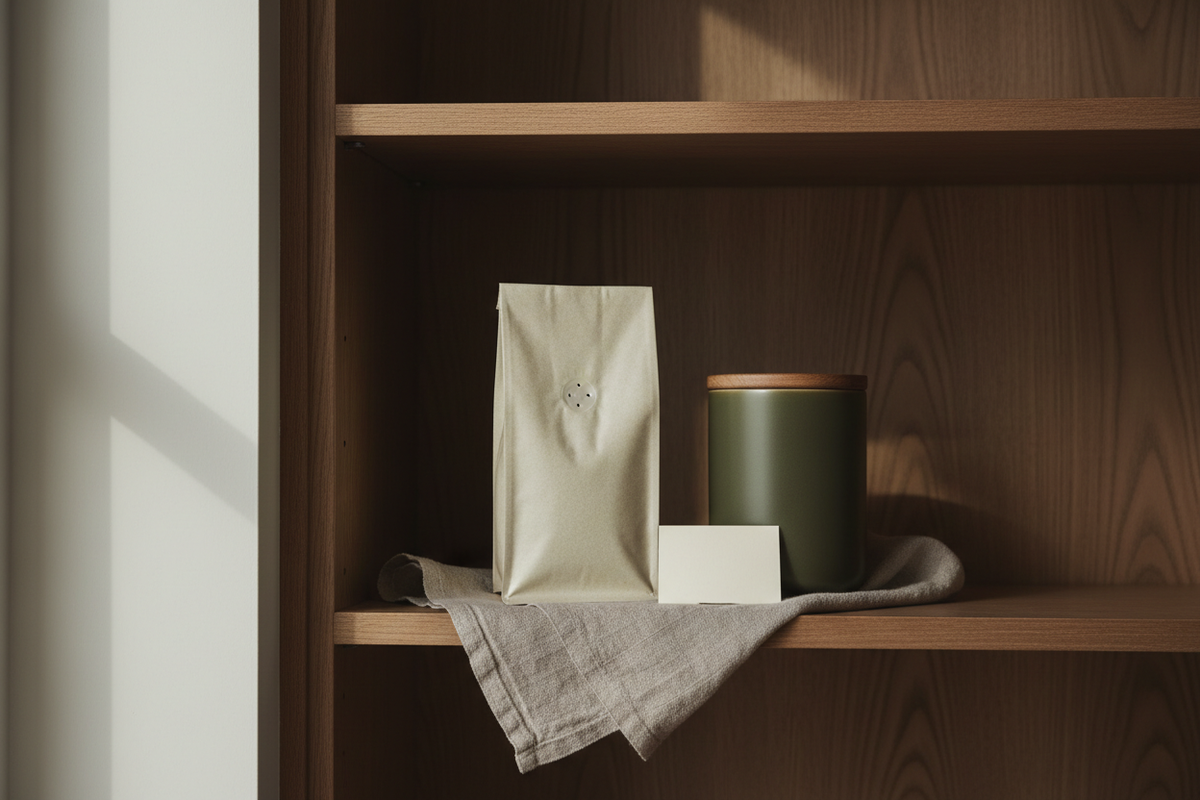
The ideal storage container is airtight, opaque, and made of a non-reactive material. Ceramic or stainless steel canisters with airtight lids are the gold standard. Even better: containers with a one-way CO₂ valve, which lets gas escape without letting oxygen in.
Avoid clear glass jars on the counter — they look beautiful but expose your beans to light. Avoid plastic bags with no seal, and never store beans in the bag they came in once it's been opened (unless it has a resealable zip and a one-way valve).
Where to Store Coffee Beans
The best spot is a cool, dark, dry place — a pantry shelf or a cabinet away from the stove or oven. Room temperature storage in an airtight container is ideal for beans you'll use within 2–4 weeks.
Counter: Fine if your container is opaque and airtight, and you'll finish the beans within 2 weeks.
Pantry/cabinet: The best everyday option — away from heat, light, and humidity.
Freezer: Only for long-term storage of unopened, vacuum-sealed bags. More on this below.
Should You Refrigerate Coffee Beans?
No. The refrigerator is one of the worst places to store coffee. It's humid, full of odors, and the temperature fluctuations cause condensation on the beans every time you open the door. Coffee absorbs surrounding smells readily — your beans will start tasting like last night's leftovers.
Skip the fridge entirely.
Can You Freeze Coffee Beans?
Yes — but only under specific conditions. Freezing works well for long-term storage of beans you won't use for several weeks or months. The key rules:
- Only freeze beans that are still in a sealed, airtight, vacuum-packed bag
- Never refreeze beans once thawed
- Portion beans into small airtight bags before freezing so you only thaw what you need
- Let frozen beans come fully to room temperature before opening the bag — this prevents condensation
For everyday use, freezing is unnecessary and adds risk. Stick to pantry storage for beans you'll use within a month.
How Long Do Coffee Beans Stay Fresh?
Freshness depends on roast date, not expiration date. Here's a general guide:
- Whole beans, properly stored: Peak flavor within 2–4 weeks of roast date; acceptable up to 6–8 weeks
- Ground coffee: Degrades much faster — best within 1–2 weeks of grinding
- Vacuum-sealed, unopened bags: Can last 3–6 months, but flavor peaks earlier
This is why buying whole beans and grinding fresh makes such a noticeable difference in your cup.
Light vs. Dark Roast: Does Roast Level Affect Storage?
Yes. Dark roasts are more porous and oily than light roasts, which means they oxidize faster. If you're drinking a dark roast like The Parisian French Roast or our 6-Bean Dark Roast Espresso Blend, aim to use them within 2–3 weeks of opening. Light and medium roasts like our Ethiopia Natural or Colombian Single Origin hold up a bit longer.
Whole Beans vs. Pre-Ground: What's Worth It?
Grinding exposes dramatically more surface area to oxygen. A whole bean has a protective outer layer; once ground, that protection is gone. Pre-ground coffee can go stale within days, while whole beans stay fresh for weeks. If you want the best cup possible, invest in a burr grinder and grind right before brewing.
Practical Storage Tips at a Glance
- Buy in smaller quantities more frequently — freshness beats bulk savings
- Always check the roast date, not just the best-by date
- Store in an airtight, opaque container in a cool, dark cabinet
- Grind only what you need, right before brewing
- Never store near the stove, oven, or in direct sunlight
- Avoid the fridge; use the freezer only for long-term, sealed storage
Start with Freshly Roasted Beans
Even the best storage habits can't save stale beans. The foundation of a great cup is starting with freshly roasted, high-quality coffee. Explore our full range of single-origin coffees and signature blends — roasted to order and shipped fresh so you get the most out of every bag.
If you're not sure where to start, our Best Sellers Coffee Sample Pack is a great way to explore a range of roast profiles while they're at peak freshness.