
The Best Water for Brewing Coffee at Home (And Why Yours Tastes Flat)
Your beans probably aren't the problem. Water is 98.5% of your cup, and distilled or softened water quietly wrecks extraction. Here's the mineral range and brew temperature that fix a flat-tasting coffee.
Will Torres
Updated
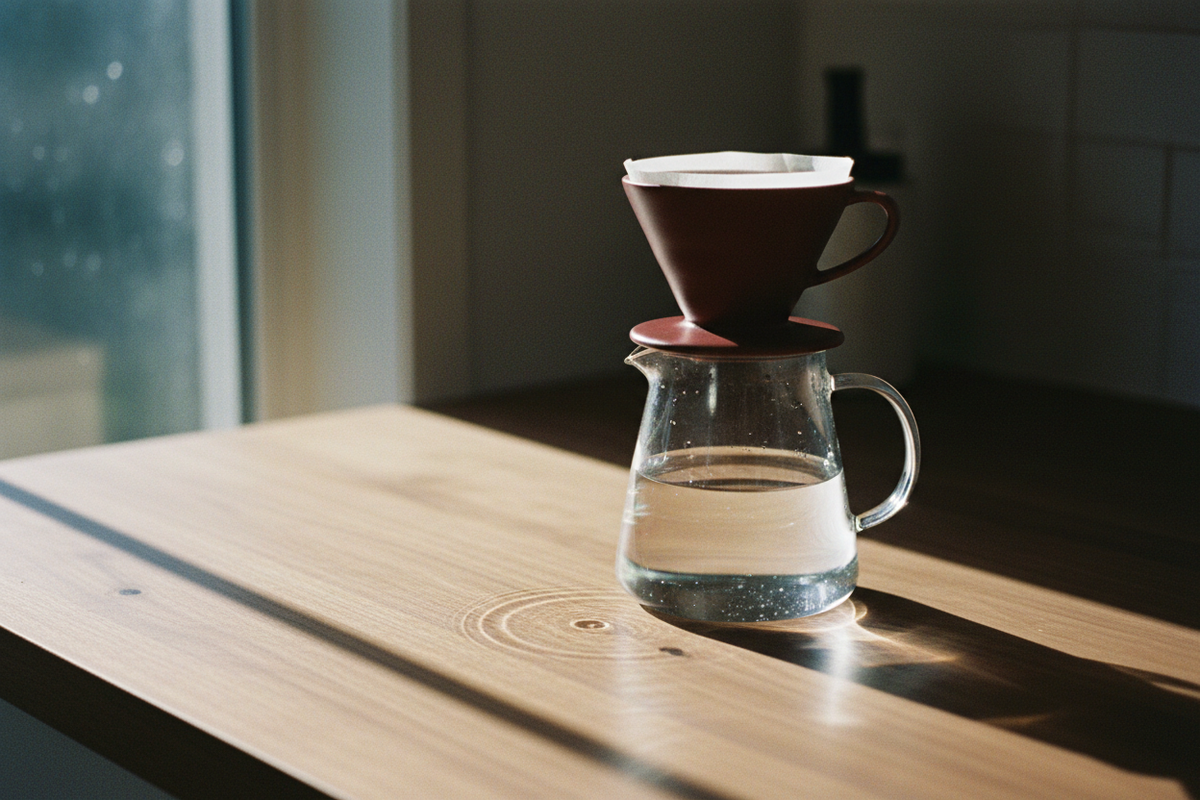
The Tasting Table / Brew guide
Start with water you enjoy drinking and a repeatable brewing recipe. Compare the results before changing your water, grind or temperature.
In this article
Why water does the work
Coffee is about 98.5% water. That water isn't a neutral carrier, it's the solvent doing the extraction.
Mineral composition matters. Different water sources can change how coffee tastes. Total dissolved solids alone cannot tell you which minerals are present or predict the finished cup.
Hard water vs soft water coffee
Check your equipment’s water guidance. Hardness and alkalinity are different measurements. Follow your brewer’s recommendations for water and scale prevention.
Know what your filter does. Water softeners and carbon filters work differently. Check the system’s specifications instead of assuming all filtered water is the same.

| Check | What it tells you |
|---|---|
| Taste and odor | Start with drinking water you enjoy. |
| Total dissolved solids | An estimate of dissolved substances, not their individual composition. |
| Brew temperature | Try 195–205°F for pour-over and adjust by taste. |
Coffee water temperature in Fahrenheit
Try 195–205°F for pour-over. This is a useful starting range, not a guarantee of a particular flavor. Grind, dose, contact time and the coffee also affect the result.
A temperature-controlled kettle can help make your recipe repeatable. Boiling temperature and cooling time vary with conditions.
Try a modest temperature adjustment, keeping the other variables consistent, and compare by taste.
Mineral content in coffee extraction
- For a noticeable chlorine taste: consider a filter rated for that issue.
- For hard water: consult your equipment’s water requirements.
- For a controlled comparison: use a consistent water source and record your recipe.
Start with fresh cold drinking water and heat it in your kettle.
Dial it in from there
A repeatable starting recipe
- Filtered water, 200°F.
- 1:16 starting ratio: 20 g coffee to 320 g water.
- Pour-over finishes in 3:00 to 3:30 total. French press steeps 4 minutes.
- Brew runs long, grind coarser. Runs fast and tastes sour, grind finer.
- Change one variable at a time.
Then check your coffee. Store it sealed away from heat and moisture. Flavor changes with storage and roast; there is no universal four-week deadline for all coffees.
A good place to test your new water is a clean, balanced medium roast where the changes are obvious. Brew a cup of specialty medium roast whole bean coffee with your old tap water and again with filtered water at 200°F, side by side. Compare the cups and choose the one you prefer.
Start with water. It's the cheapest upgrade in your kitchen.
0 comments