

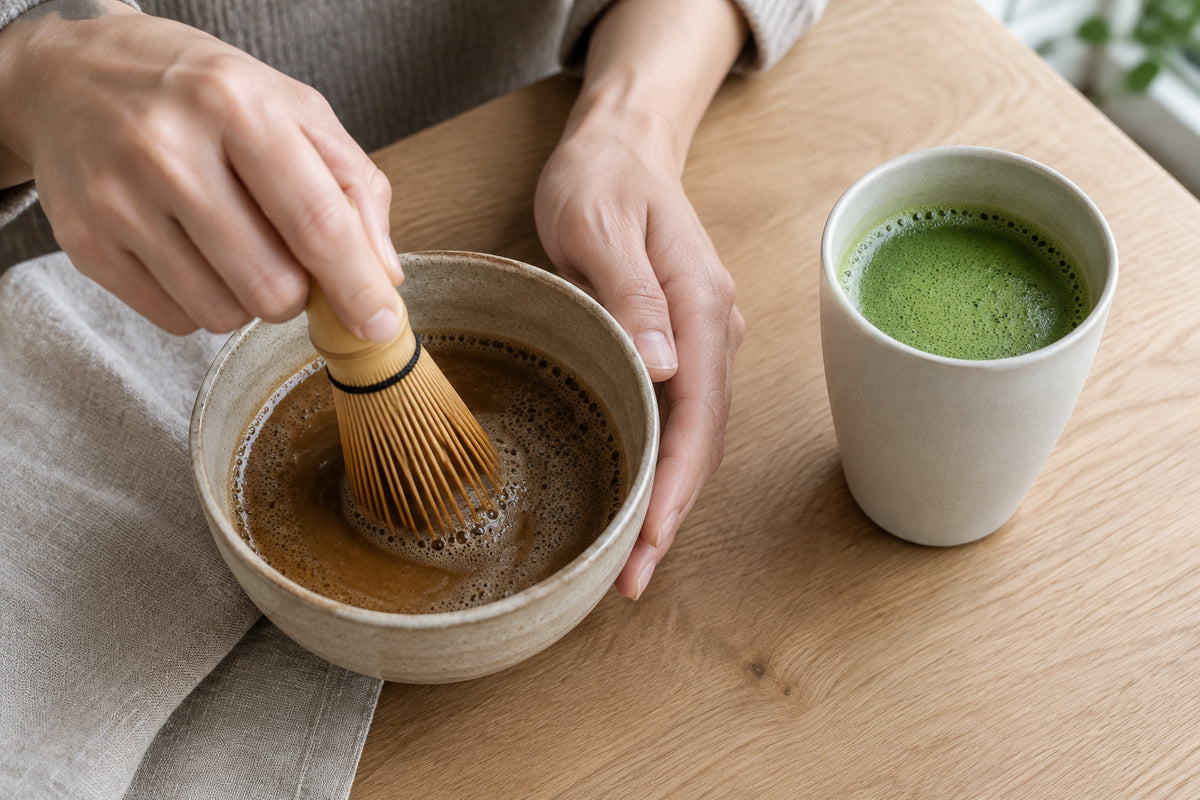
The Tasting Table / Two Japanese teas
Matcha is the green, savory cup; hojicha turns toward toast and warmth. Both of ours are Japanese green tea powders you whisk, but they do not taste alike. If you are choosing your first pouch, start with the flavor you actually want to drink.
At a glance: The Ceremony is stone-milled matcha from Shizuoka with buttery umami and gentle sweetness. The Ember is roasted, stone-milled hojicha with toasted cereal notes and balanced umami. Both contain green tea and therefore caffeine. The amount in a cup depends on the powder and dose; do not treat hojicha as caffeine-free.
Hojicha vs. matcha at a glance
| What to compare | Matcha: The Ceremony | Hojicha: The Ember |
|---|---|---|
| Flavor direction | Green tea, buttery umami and gentle sweetness | Roasted tea, toasted cereal and balanced umami |
| Appearance | Green powder | Brown roasted tea powder |
| Preparation | Sift and whisk the powder with water | Whisk the roasted powder with water |
| Caffeine | Contains caffeine; amount varies with the tea and serving | Contains caffeine; amount varies with the tea and serving |
These descriptions refer to our two powders; other hojicha can be sold as loose leaf tea and prepared differently.
Why do hojicha and matcha look and taste different?
Both are green teas, but roasting gives hojicha its brown color and toasted aroma. Matcha keeps the fresh green look and more pronounced green-tea character. The Ember is made from selected leaves and stems that are roasted before milling; The Ceremony is a stone-milled matcha. The ingredient listed on both products is Japanese green tea, not a ready-sweetened latte mix.
In the cup, our matcha leans buttery and gently sweet with an umami edge. Our hojicha leans toward toasted cereal with balanced umami. Powder is suspended in water when you whisk it, so a little settling is normal; neither is an instant powder that dissolves like sugar.
Which has more caffeine?
Both matcha and hojicha contain caffeine. The amount in your cup depends on the specific tea and the amount used, so a general “per cup” number does not reliably describe either of our powders. Check the product information and serving size if caffeine matters to you; roasted tea is not necessarily caffeine-free. The FDA's caffeine guide explains why amounts vary between products and servings.
How do you prepare each powder?
For a small matcha bowl, begin with about 2 g of The Ceremony whisked into 2–3 fl oz (60–90 mL) water around 175°F (80°C). Sift clumps, add a splash of water first, whisk smooth, then add the rest. For a milder eight-ounce matcha drink, dilute after whisking; 1 g in 8 fl oz is a very light version.
For The Ember, begin with about 3 g powder in 8 fl oz (240 mL) water around 175°F. Whisk the powder with a little water before adding the remainder. These are different starting cups, not a controlled caffeine or strength test. Change the water to suit your taste rather than forcing both powders into an identical recipe.
Which makes the latte you would order again?
Choose matcha when you want green-tea flavor to come through milk. Choose hojicha when you want a roasted, toasty base. For either, whisk with a little water before adding milk or ice to avoid dry clumps. Our iced matcha latte recipe and hot and iced hojicha latte guide give measured versions.
Which one is better?
Neither tea is “better” by default: make one plain first, then with milk, and notice whether you come back for green umami or roasted warmth. Soft and sweet notes? Go for Matcha. Nutty and toasty? Go for Hojicha.
New to the green-tea side? Our matcha preparation guide walks through the first bowl.
Comments