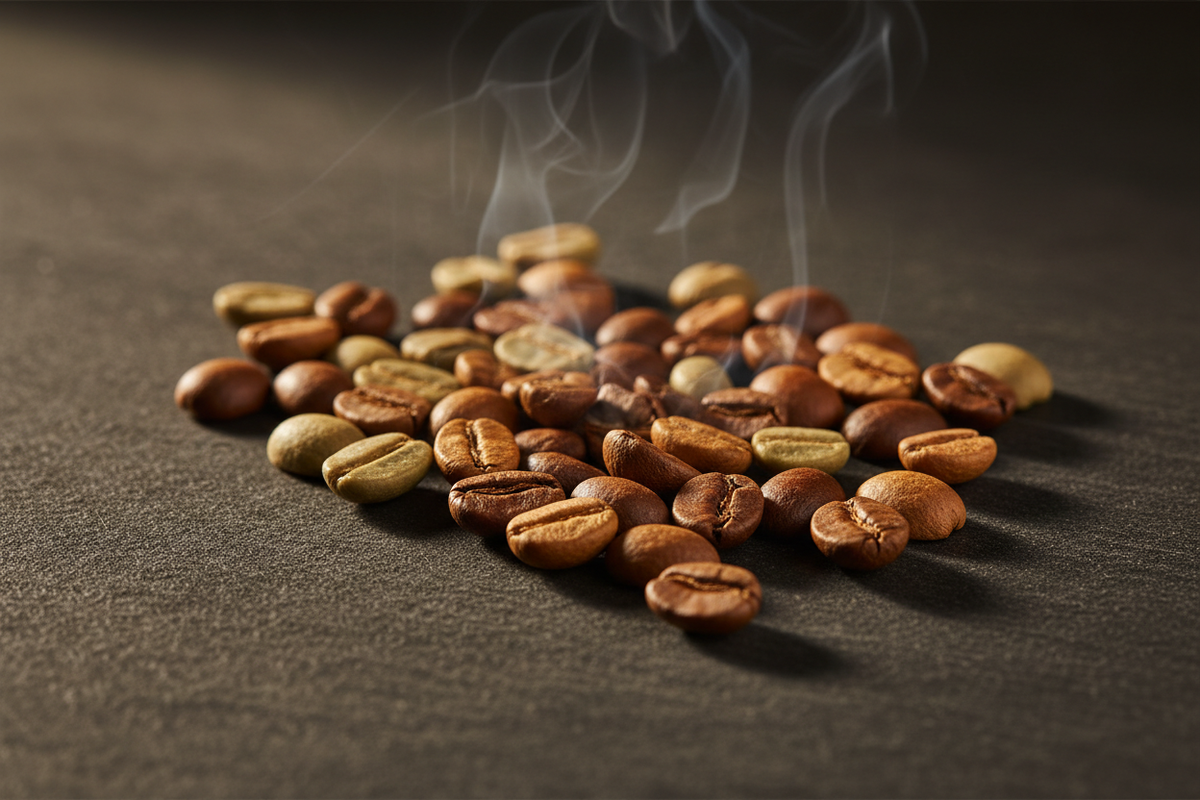
Green coffee beans being roasted in a small-batch drum roaster with heat and steam visible — the science of coffee roasting and flavor development

The Science Behind Coffee Roasting: Flavor Development

Cozy Notes Team

Overview

Explore the fascinating science of coffee roasting and its impact on flavor development, with a focus on the unique characteristics of Kenya coffee. Understand key processes like the Maillard reaction and pyrolysis, and learn about different roast types and brewing methods to enhance your coffee experience. Embrace the journey from bean to cup and become a flavor explorer!

Table of Contents

Key Takeaways

  • Coffee roasting transforms green beans into fragrant brown beans through heat, initiating chemical reactions that develop unique flavors.
  • The Maillard reaction begins around 300°F (150°C) and creates rich caramel and nutty flavors, essential for specialty coffees like Kenya coffee.
  • Pyrolysis breaks down carbon molecules at higher temperatures, forming aromatic compounds that contribute to the vibrant fruit flavors found in Kenya coffee.
  • Development time in roasting significantly impacts flavor; longer roasting can create bold flavors but may mask unique characteristics of certain beans.
  • Soil composition, altitude, and climate in coffee-growing regions like Kenya influence the beans’ flavor profiles, enhancing acidity and fruity notes.
  • Different roast types (light, medium, dark) bring out distinct characteristics, with light roasts best highlighting fruity and floral notes, ideal for Kenya coffee.
  • Brewing methods such as pour over and French press can alter the final taste, emphasizing the importance of technique in enjoying coffee’s complexity.

Coffee lovers around the globe cherish the unique flavors that come from different coffee beans. One of the most fascinating processes that contributes to the complexity of these flavors is coffee roasting. In this article, we delve into the science behind coffee roasting, particularly focusing on how it influences flavor development, and we’ll take a particular look at the exotic notes found in Kenya coffee.

The Basics of Coffee Roasting

Coffee roasting is the process of transforming green coffee beans into the fragrant brown beans we’re all familiar with. This transformation occurs through the application of heat, which initiates various chemical reactions within the coffee beans. These reactions are responsible for developing the distinct flavors and aromas that make each brew unique.

Understanding Flavor Development

The journey from raw bean to roasted perfection is a complex dance of chemistry and art. Various parameters like heat, time, and bean variety play pivotal roles in flavor creation. Let’s break down this fascinating process by examining some crucial stages:

1. Maillard Reaction

The Maillard reaction is a chemical reaction between amino acids and reducing sugars that gives browned foods their distinctive flavor. This process begins around 300°F (150°C) during roasting. It’s responsible for producing those rich caramel, nutty, and chocolate-like flavors often sought after in specialty coffees, including Kenya coffee.

2. Pyrolysis

As temperature rises, pyrolysis occurs, leading to the breakdown of carbon molecules and the formation of an array of aromatic compounds. Diverse temperatures will yield various flavor profiles. For instance, Kenya coffee is known for its bright acidity and vibrant fruit flavors that are largely a result of precise roasting temperatures that enhance these qualities.

3. Development Time

The length of time the beans spend in the roaster significantly affects the final flavor. Longer roasting times tend to produce darker roasts, resulting in bold flavors that, while enjoyable, can sometimes mask the nuanced characteristics unique to certain beans, particularly those sourced from good regions like Kenya.

The Role of Origin in Flavor

Each coffee-growing region imparts unique characteristics to the beans cultivated there. Factors such as soil composition, altitude, and climate all influence flavors. Let’s take a closer look at how these factors contribute to what we love about Kenya coffee.

Factor Effect on Flavor
Soil Composition Mineral-rich volcanic soil provides a vibrant flavor profile.
Altitude High altitudes lead to slower maturation and more complex flavors.
Climate Temperature and rainfall patterns contribute to the development of acidity and fruity notes.

Types of Coffee Roasts

  • Light Roast: Often retains the original flavors of the bean, best for highlighting fruity and floral notes, perfect for Kenya coffee.
  • Medium Roast: Balances acidity and flavor, offering a more rounded profile while still retaining some unique notes.
  • Dark Roast: Characterized by a bold, smoky flavor that often overshadows the origin characteristics of the bean.

Experimentation and Creativity

Roasting coffee is as much an art as it is a science. Every roaster brings their unique touch to the process; through experimentation, they can create exceptional flavors that highlight the best characteristics of the beans. This is why it’s essential for coffee enthusiasts to explore different roasters and their unique approaches to roasting beans such as Kenya coffee.

Brewing Your Perfect Cup

After the roasting process, the next step is brewing. The flavor developed during roasting is essential, but brewing method and technique can significantly alter the final taste in your cup. Here are some popular brewing methods:

  1. Pour Over: Allows for precise control over water temperature and pouring technique, which can enhance the delicate notes in Kenya coffee.
  2. French Press: Ensures full-bodied flavor extraction, suitable for those who appreciate robust notes.
  3. Espresso: Concentrated and intense, perfect for those who enjoy powerful flavors in their coffee.

The Future of Coffee Roasting

As the coffee industry evolves, so does the technology and knowledge surrounding coffee roasting. Innovations in roasting equipment and techniques allow for greater consistency and precision, leading to outstanding flavor profiles. Roasters are now able to trace back to the origin of each bean more than ever, ensuring that coffee lovers enjoy the most authentic experiences in their cups.

Become a Flavor Explorer!

Understanding the science behind coffee roasting opens up a world of flavors for enthusiasts. Emphasizing the role of roasting in the coffee experience creates buzz and excitement. Whether you’re a seasoned barista or simply a coffee lover at home, exploring different roasts, especially Kenya coffee, can enhance your appreciation for the craft.

So next time you enjoy a steaming cup of coffee, remember the incredible journey those beans have traveled—from the lush fields of Kenya to the roaster’s drum. Embrace the complexity and richness of flavors created throughout the roasting process, and let every sip take you on a delightful adventure.

Frequently Asked Questions

1. What is coffee roasting?

Coffee roasting is the process of transforming green coffee beans into fragrant brown beans through the application of heat, which initiates various chemical reactions that develop distinct flavors and aromas.

2. How does roasting influence flavor development?

Roasting influences flavor development through chemical reactions like the Maillard reaction and pyrolysis, as well as factors such as heat, time, and bean variety.

3. What are the different types of coffee roasts?

The different types of coffee roasts include Light Roast, which highlights original bean flavors; Medium Roast, which balances acidity and flavor; and Dark Roast, known for its bold, smoky flavor.

4. What factors affect the flavor of Kenya coffee?

Factors that affect the flavor of Kenya coffee include soil composition, altitude, and climate, each contributing to the vibrant and complex flavor profile known for its bright acidity and fruity notes.

5. What are some popular brewing methods for coffee?

Popular brewing methods include Pour Over, which allows precise control over extraction; French Press, which ensures full-bodied flavor; and Espresso, known for its concentrated and intense flavor.

Glossary

Term Meaning
Coffee Roasting The process of transforming green coffee beans into aromatic brown beans using heat.
Maillard Reaction A chemical reaction that develops flavors during roasting, creating caramel and nutty notes.
Pyrolysis The breakdown of carbon molecules at high temperatures, producing aromatic compounds.
Development Time The duration beans are roasted, affecting the final flavor profile.
Light Roast Retains original bean flavors, highlighting fruity and floral notes.
Medium Roast Balances acidity and flavor for a rounded coffee profile.
Dark Roast Features bold, smoky flavors that often mask the bean’s origin characteristics.
Pour Over A brewing method allowing precise control over water temperature and pouring.
French Press A method that extracts full-bodied flavors from coffee grounds.
Espresso A concentrated coffee brew known for its intense flavor.

Linked Product

African Espresso Blend coffee bag

African Espresso Coffee Blend – Kenya, Tanzania & Ethiopia

The African Espresso Coffee Blend combines beans from Kenya, Tanzania, and Ethiopia to create a complex cup with tasting notes of dark fruit, rich cocoa, and a wine-like finish. Ideal for espresso, lattes, cappuccinos, or pour-over methods, this medium-dark roast is small-batch roasted for peak freshness. Sourcing directly from farms committed to quality and sustainability, each cup supports the growers behind this exceptional blend.

View Product
Back to blog

Leave a comment

Please note, comments need to be approved before they are published.